How to spot a fake locksmith before you call
Stolen photographs, an address that is really a parking lot, and a price that doubles on the doorstep. The pattern is documented — here is how to check in under a minute.
LAK Locksmith Team5 min read
✳03 / 04 · Residential service
Changes which key opens your existing locks, without replacing the hardware.
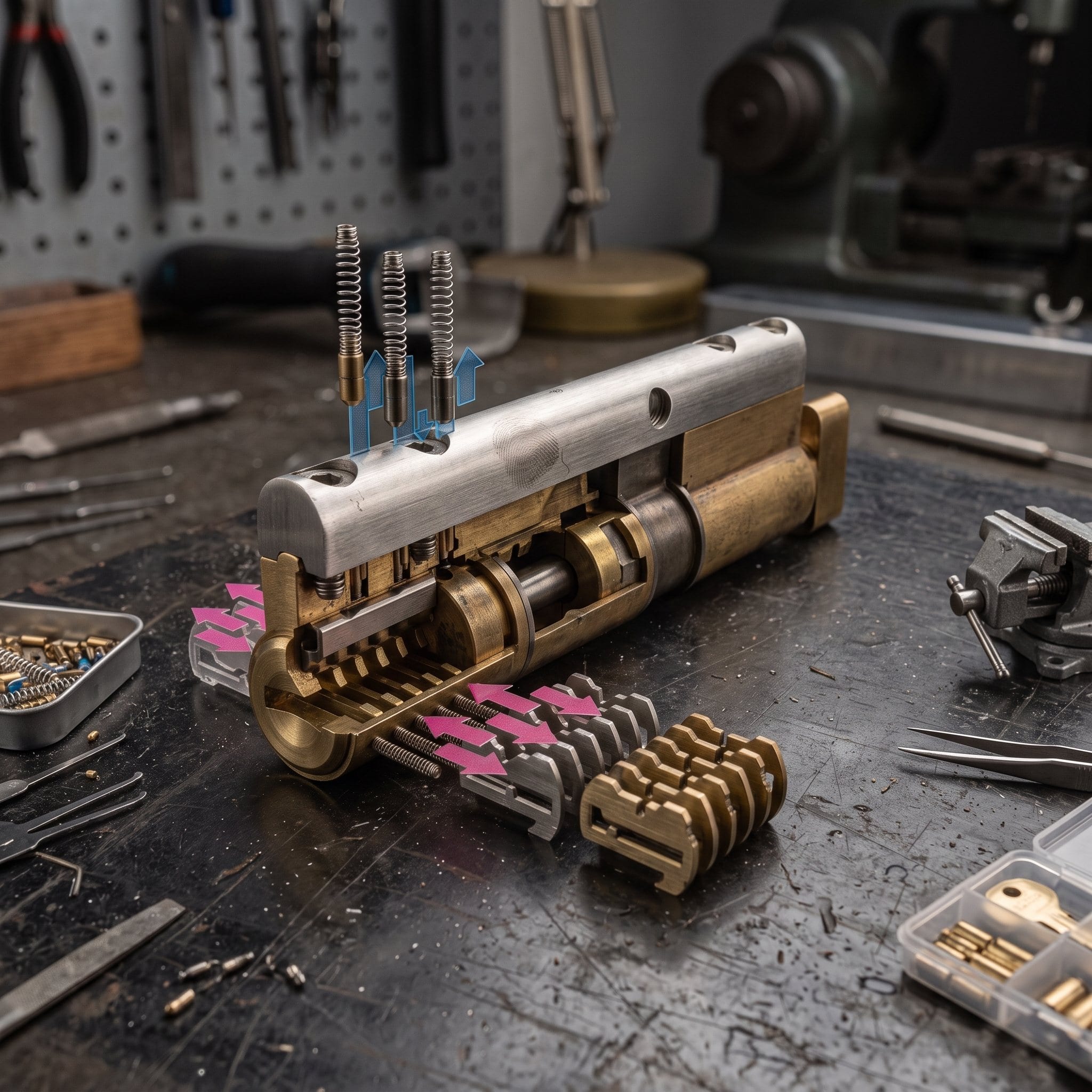
Rekeying resets the pins inside a lock so old keys stop working and a new key takes over. It is the faster and cheaper option any time the hardware is sound and the real problem is who has a key. Several locks can be rekeyed to a single new key in one visit.
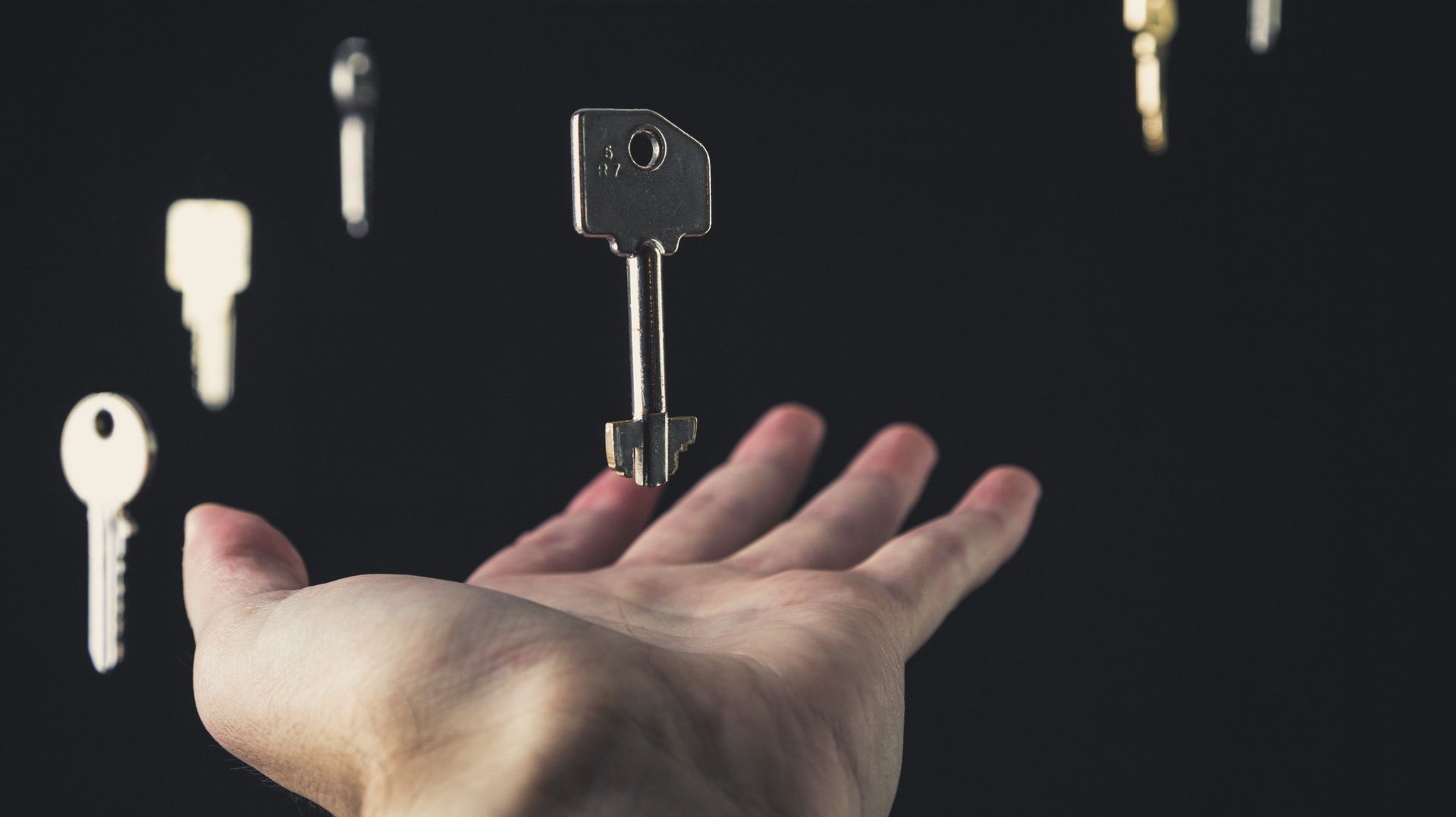
Inside every pin-tumbler lock is a row of pins matched to your key's cuts. Rekeying swaps those pins to a new pattern: the hardware stays on the door, every old key dies instantly, and a fresh key — cut on the spot — takes over. It is the same security outcome as replacing the lock for the specific problem of unaccounted-for keys, at a fraction of the disruption. Several locks can be rekeyed to one new key in a single visit, which is how a house full of mismatched locks ends up running on one key.
Just moved in — the previous owner's agent, cleaner, neighbour and in-laws all potentially hold copies. A renovation wrapped up — contractor keys are famously never returned. A roommate left, a relationship ended, a purse with keys and ID in it went missing. Landlords rekey between tenants for the same reason. In every one of those cases the locks are fine; the key population is the problem, and rekeying resets it to exactly the keys you hand out.
Start to finish, so nothing on the day is a surprise.
A quick check that each cylinder is sound. A worn-out lock gets flagged for replacement instead of a rekey that would inherit its problems.
Cylinders come off the door, pins are swapped to a new pattern, and everything goes back on — typically all in one visit.
As many copies as you actually want, cut at the door while you watch, plus a test of every lock with the new key.
If you still hold an old copy, we test it in front of you. Watching a dead key fail to turn is the whole point of the visit.
Revokes every copy in circulation at once — previous owners, old tenants, contractors, the spare under the flowerpot
Keeps hardware you already paid for, rather than replacing working locks
Normally completed on site in one visit, with new keys cut on the spot
The questions this job actually gets, answered the way they would be on the phone.
If the hardware is sound and the problem is who holds a key: rekey. If the lock is worn, damaged, or simply not good enough for the door: replace. We tell you which one your door needs before any work starts, and rekeying is deliberately the cheaper answer when it fits.
Residential work is mobile across the GTA — the technician and the equipment come to you, 24/7. Based at 470 N Rivermede Rd, Vaughan.
Not the job you have? The rest of what we do on this side of the trade — every one of them its own page, written the same way.
The journal covers this side of the trade in depth — how things fail, what they cost you when they do, and what to check before calling anyone at all.
Stolen photographs, an address that is really a parking lot, and a price that doubles on the doorstep. The pattern is documented — here is how to check in under a minute.
From the phone call to the door opening — what the technician checks, why picking beats drilling almost every time, and what you will be asked to show.
The previous owners' keys are still out there somewhere. Here is when changing the pins is enough, and when the hardware itself has to go.
Everything LAK does sits in one of these: your car, your bike, your home or your business.