✳Homes & Condos· Essential guide
From the phone call to the door opening — what the technician checks, why picking beats drilling almost every time, and what you will be asked to show.
✳On this page
Being locked out of your house is a fifteen-minute problem that feels like a two-hour one, mostly because nothing about it is familiar. This is what the job actually looks like from the other side, so that the part you are paying for is a process you recognise.
The phone call decides most of the job
A good call takes about ninety seconds and covers four things: the address, what kind of door it is, what kind of lock is on it, and whether anybody is inside — a child, a pet, or something on the stove turns a routine call into an urgent one and it should be said immediately.
The lock question matters more than it sounds. "A knob and a deadbolt" and "one of those round chrome ones with the flat key" describe different jobs, and a photograph sent by text answers it better than any description. It also determines the price you are quoted, which is why you should get that price before anyone is dispatched.
What happens at the door
The lock is assessed before anything touches it
The first thing done at a lockout is not a tool. It is a look — at the cylinder, the strike, the gap between door and frame, and whether the door is simply latched or actually deadbolted. Perhaps one call in ten never becomes a lockout at all, because a back door, a garage service door or an unlatched window is open and nobody had checked.
Non-destructive entry is the normal outcome
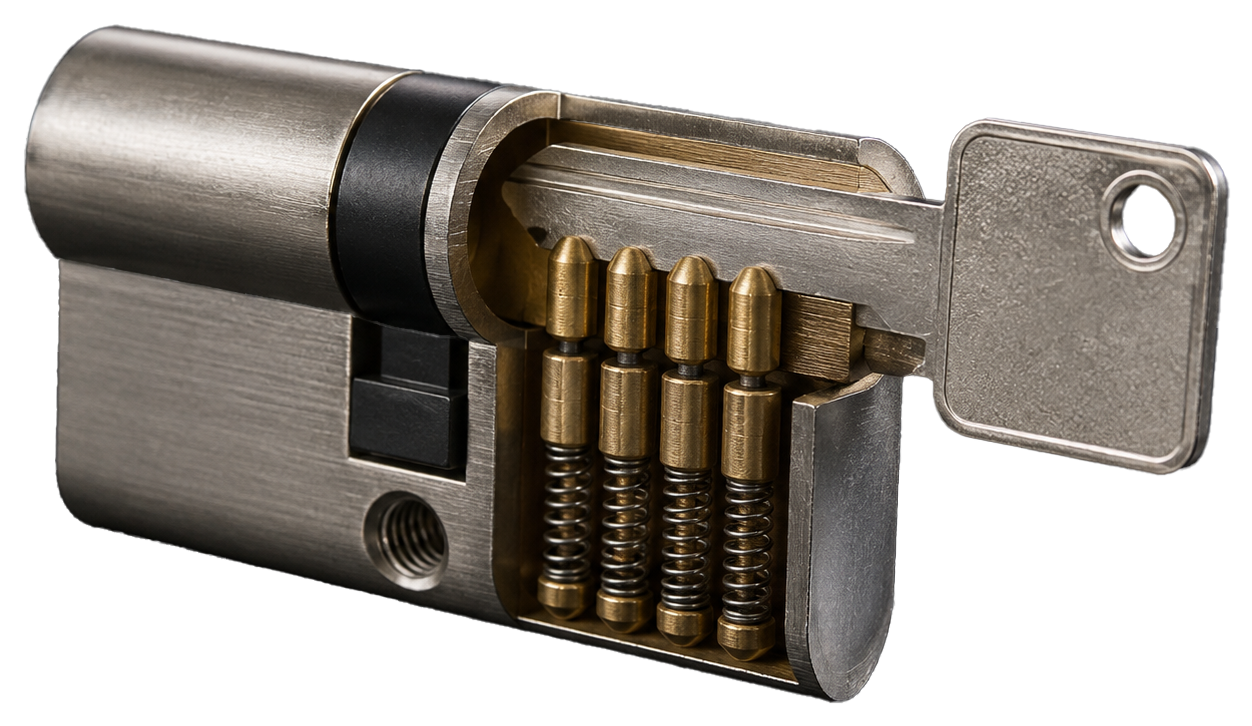
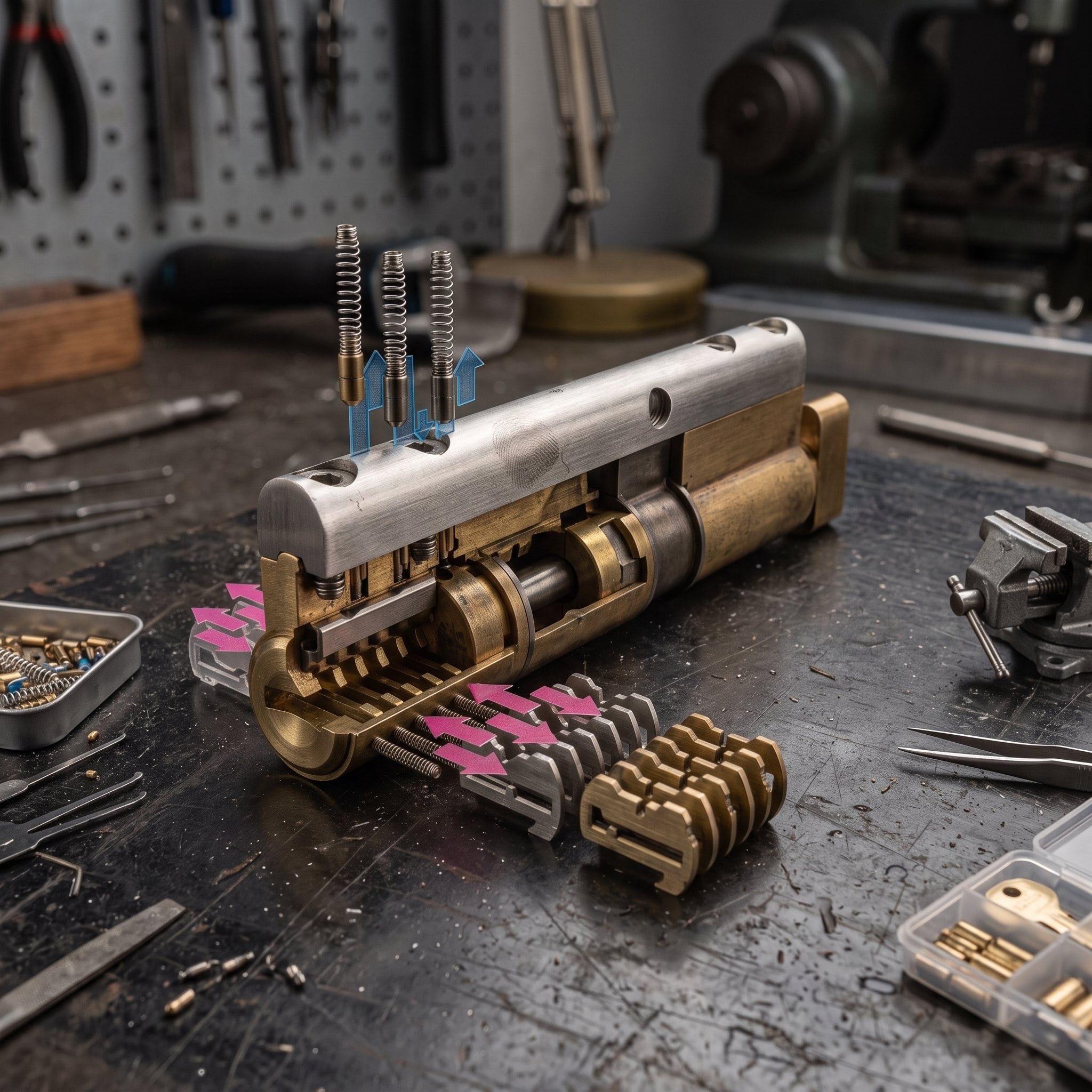
Most residential cylinders are opened by picking or by a bypass that never touches the lock's internals. Picking manipulates each pin stack to the shear line until the plug turns; a bypass works the latch itself instead. Either way the lock is functioning when you get your keys back and there is nothing to replace.
Drilling is a decision, not a step
Drilling destroys the cylinder and commits you to buying a new one. It is the right call in a narrow set of cases: a cylinder that has failed mechanically, a broken key snapped deep in the plug, or high-security hardware with anti-pick protection that makes manipulation impractical at the roadside. What it is not is a shortcut, and it is the single most common thing an untrustworthy operator reaches for because it converts a service call into a hardware sale. If someone proposes drilling, ask what they tried first. The answer should be specific.
Why you will be asked to prove you live there
Because the alternative is a trade in which anybody can have any door opened by describing it convincingly. Expect to show a licence, a lease, a utility bill, or mail with the address on it once the door is open. If none of that is inside, a landlord, a property manager or a concierge confirming you is normally enough. It is a two-minute inconvenience that exists entirely for your benefit.
Condos and apartments have an extra layer
Suite doors frequently sit inside a building-wide system, and buildings have rules. Some require the concierge to verify the resident first; some have a contracted locksmith and will not accept work by anyone else on the suite hardware; some have restricted keyways where blanks are controlled and a replacement key can only come through management. Ask the front desk first — it can save the whole callout.
What to do while you wait
- Check every other door and any ground-floor window before anyone arrives.
- Find something with your address on it, or work out who can confirm you.
- If you are outside at night or the street feels wrong, wait somewhere with people and lighting and give the technician a call when they are close.
- Photograph the lock and send it — it removes the guesswork.
After the door is open
There is one question worth asking before the van leaves: does the key still exist somewhere it should not? A lockout caused by a key lost on a bus is a different problem from a lockout caused by a key left on the kitchen counter. If it is genuinely lost, the lock now opens for whoever finds it, and a rekey rather than a replacement is usually all that is needed to end that.
And if you are reading this while still standing outside, spend the next minute on checking that whoever you are about to call is real. It is the highest-value minute available to you right now.
(01)Objections
Frequently asked
- Will my lock be damaged?
- Usually not. Most residential lockouts are opened by picking or bypassing the lock, and the lock keeps working normally afterwards. Drilling destroys the cylinder and is reserved for locks that have failed mechanically or resist non-destructive entry — and you should be told before it happens, not after.
- Do I have to prove I live there?
- Yes, and you should expect it. Once the door is open you will be asked for identification or a document showing the address — a licence, a lease, a piece of mail. A locksmith who never asks is not saving you an inconvenience; they are demonstrating that they would open your neighbour's door on the same terms.
- Can a locksmith open a condo or apartment door?
- Yes, but the building usually comes first. Many buildings require the concierge or property manager to confirm the resident before a unit door is touched, and some have their own rule that only their contracted locksmith may work on suite hardware. It is worth asking the front desk before booking anyone.
- What if I have a smart lock?
- It depends entirely on whether it still has a keyway. Many electronic deadbolts keep a mechanical cylinder as a backup and are handled like any other lock; keyless models may need the battery pack jumped from outside, the interior accessed another way, or the unit replaced. Say the make and model on the phone — it changes what gets loaded on the van.
(02)Ask
Have a question about this?
Questions are read by a person and answered here on the page. We don't collect your email, so we can't reply privately.
(03)Written by
LAK Locksmith Team
Locksmiths and key technicians
LAK Locksmith has been working across the Greater Toronto Area since 2021, from 470 N Rivermede Rd in Vaughan. These guides are written by the technicians who do the work — residential, commercial and automotive — and are kept to what can be demonstrated on a doorstep rather than what sells.
All articles by LAK Locksmith Team