✳Homes & Condos
The previous owners' keys are still out there somewhere. Here is when changing the pins is enough, and when the hardware itself has to go.
✳On this page
Whether to rekey or replace is the first real security decision most people make about a home, and it usually gets made on the wrong axis — cost — when the useful question is what problem you are actually solving.
What rekeying does
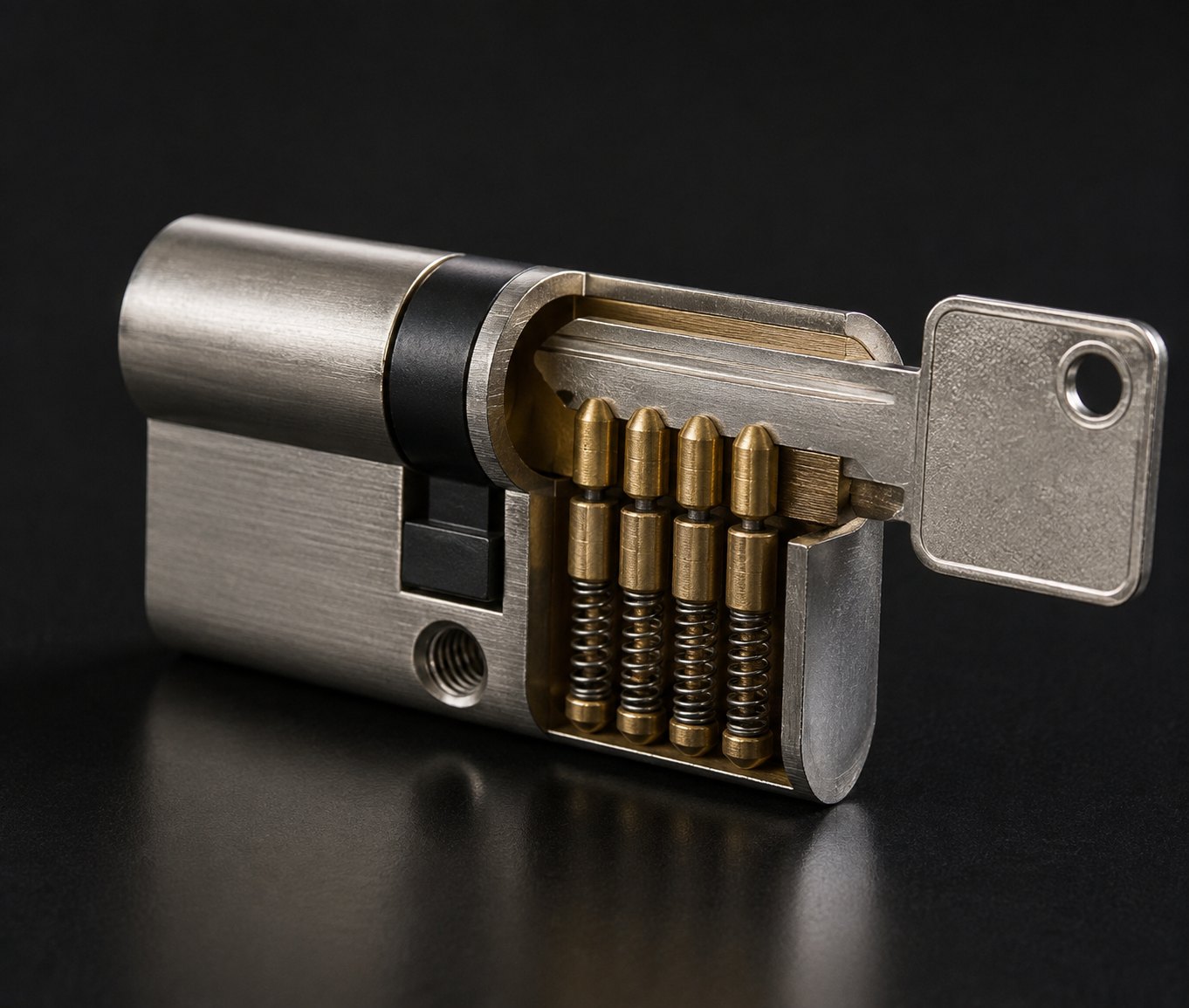
A pin tumbler cylinder holds a row of stacked pins. The correct key lifts every stack to exactly the shear line, the plug turns, and the bolt moves. Rekeying swaps those bottom pins for a different set of heights, which means a different key profile now lifts them correctly — and every key cut for the old combination stops working, permanently and immediately.
The lock stays on the door. The finish, the fit, the strike and the screw holes are all untouched. What changes is which piece of metal opens it.
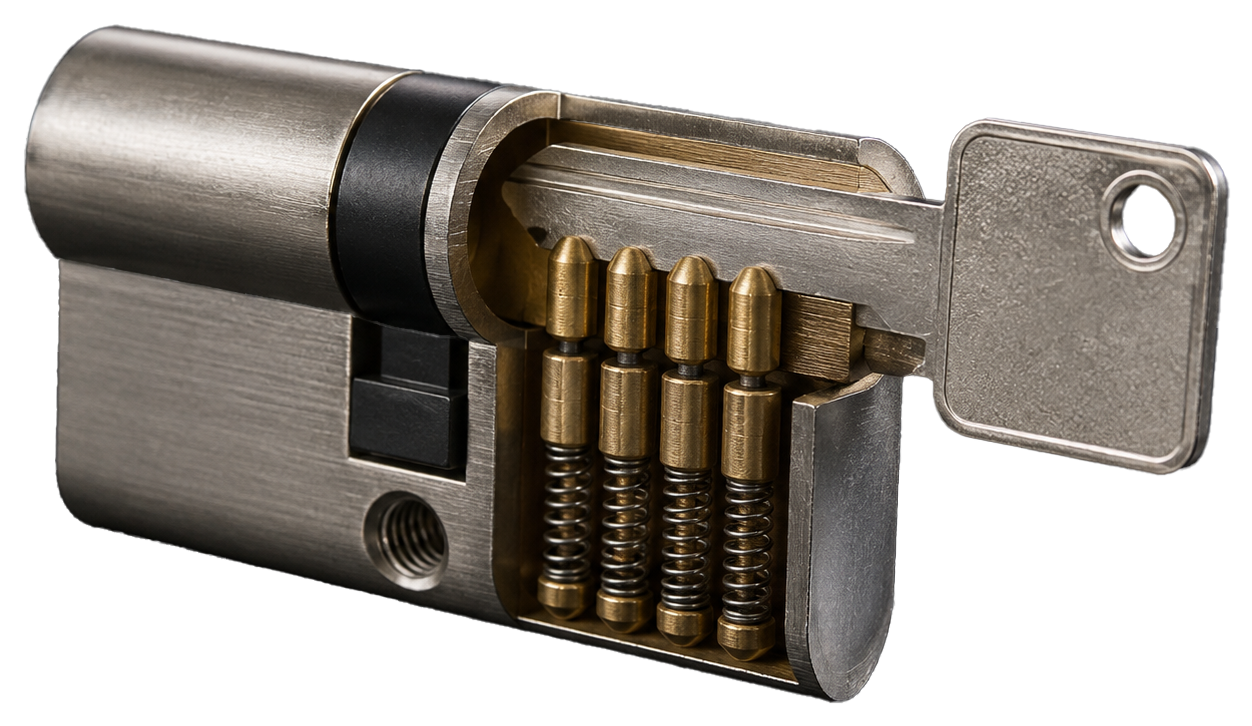
Rekey or replace: when rekeying is enough
Reach for a rekey when the hardware works and the only problem is who might hold a key:
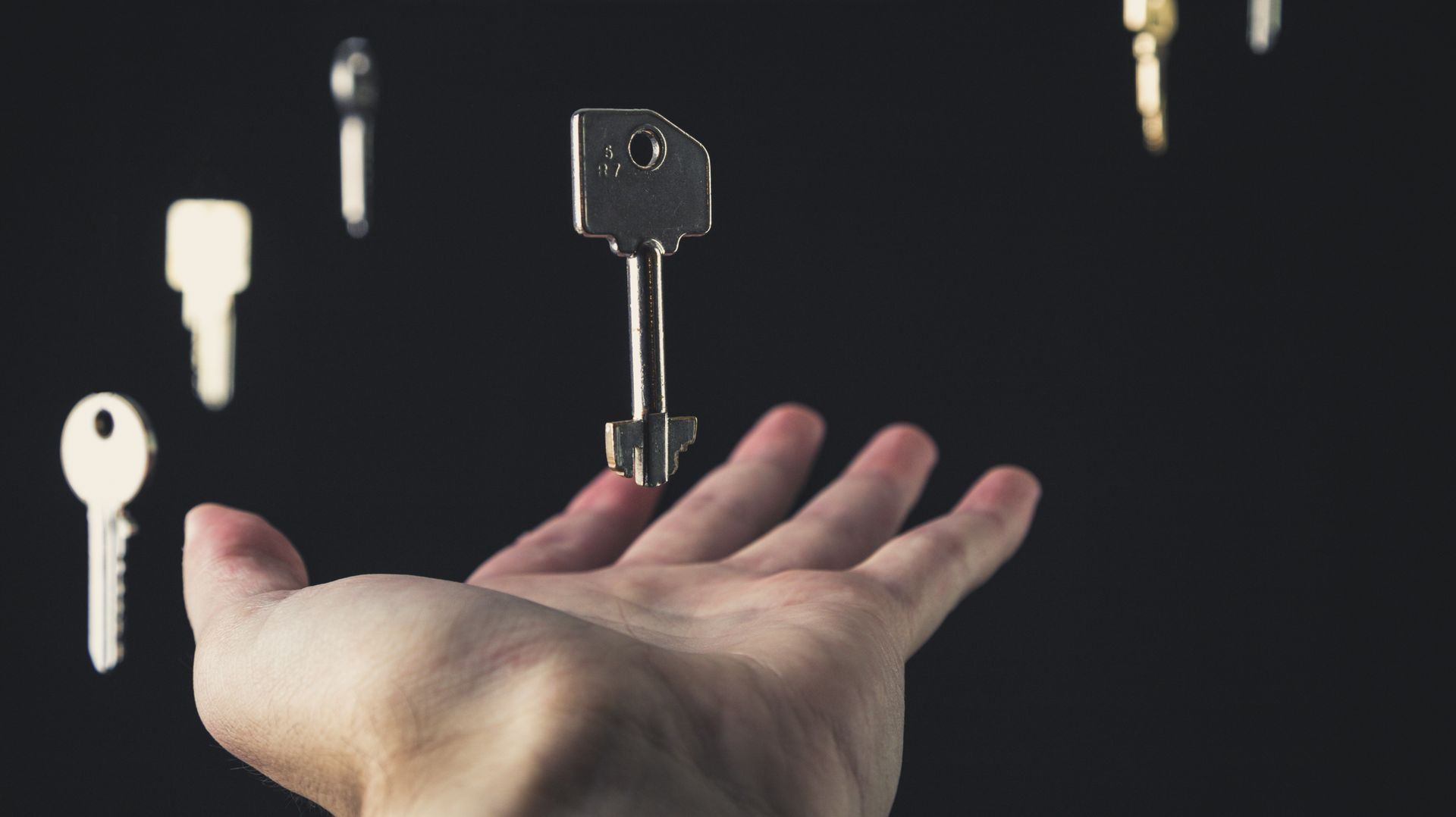
- You have just moved in. Assume copies exist. Previous owners, their family, a cleaner, a contractor, an agent, a tenant from two tenancies ago — nobody kept a list, and there is no way to reconstruct one.
- A key was lost outside the house. Especially on a keyring with anything identifying on it.
- Someone has left — a housemate, a relationship, an employee with a spare.
- You want one key for everything. Keying the front, back and garage door alike is done during the rekey and is the single biggest daily improvement most people get from a locksmith visit.
Replace when the lock itself is the problem
Rekeying a bad lock produces a bad lock with new pins. Replace when:
- The bolt or latch is worn. A key that has to be jiggled, a bolt that needs the door shouldered — that is mechanical wear and new pins will not touch it.
- The grade is wrong for the door. A builder-grade entry knob on a front door is protecting the house with roughly the strength of an interior privacy lock. Grades are worth understanding — see what Grade 1, 2 and 3 actually test.
- There is no deadbolt at all. A spring latch alone is the most common serious weakness on a residential door and no amount of rekeying changes it.
- You want a different type of lock — a keyed-both-sides deadbolt beside glass, a smart lock, a thumbturn for accessibility.
- The keyways do not match and you want one key for the house. Standardising the keyway means new cylinders somewhere.
The part almost everyone skips
The lock is rarely what fails. The frame is. A deadbolt throwing into a strike plate held by two three-quarter-inch screws is anchored in door casing, not in structure, and casing splits under a shoulder. Three-inch screws driven through the strike into the stud behind it cost almost nothing and change the failure mode of the entire doorway.
If you do one thing after a move, do that. If you do two, rekey and do that.
A reasonable order of operations after moving in
- Count every exterior door, including the garage service door and any basement entry.
- Decide which of them should share one key.
- Rekey the ones whose hardware is sound; replace the ones that are worn, missing a deadbolt, or the wrong grade.
- Upgrade the strike screws on every exterior door while the hardware is off.
- Get two keys per person and one spare that lives somewhere that is not the property.
The full version of that, including the garage remotes and the things people forget for months, is in the moving day checklist.
(01)Objections
Frequently asked
- Is rekeying as secure as replacing the lock?
- For the problem of unknown keys, yes — a rekeyed cylinder no longer opens for any key cut before it, which is exactly what replacement achieves. Replacement only wins when the lock itself is the weakness: worn, damaged, low grade, or the wrong type for the door.
- Can all my locks be made to use one key?
- Usually, provided they share a keyway — the same brand and family, or compatible ones. Keying alike is done during the rekey at no extra hardware cost. Locks from mismatched keyways have to be changed to a common one first, which is a hardware conversation rather than a pinning one.
- How long does rekeying take?
- A straightforward residential cylinder is a short job on the spot. What lengthens it is quantity and access: a house with six exterior locks, a stuck cylinder, or hardware that has to come off a warped door all add time. Ask for the count when you get the quote.
(02)Ask
Have a question about this?
Questions are read by a person and answered here on the page. We don't collect your email, so we can't reply privately.
(03)Written by
LAK Locksmith Team
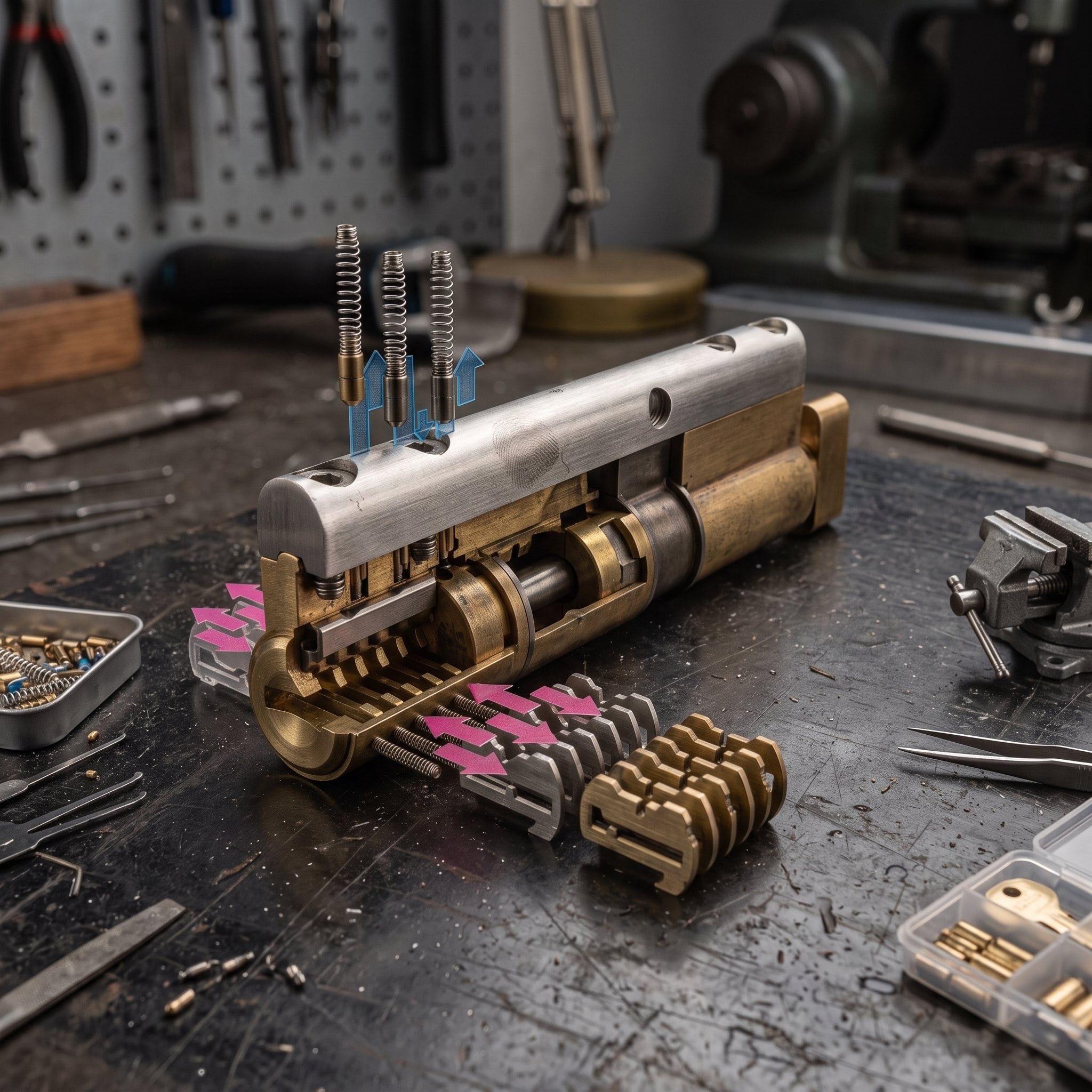
Locksmiths and key technicians
LAK Locksmith has been working across the Greater Toronto Area since 2021, from 470 N Rivermede Rd in Vaughan. These guides are written by the technicians who do the work — residential, commercial and automotive — and are kept to what can be demonstrated on a doorstep rather than what sells.
All articles by LAK Locksmith Team