✳Homes & Condos
The grade stamped on the box is a real standard with real tests behind it. What it measures, what it ignores, and why the strike plate matters more than the brand.
✳On this page
Deadbolt grades are one of the few numbers on a hardware box that mean something specific. They come from ANSI/BHMA A156 series standards, they are awarded on the results of physical tests, and the difference between Grade 3 and Grade 1 is measurable rather than marketing. What they are not is a summary of how secure your door is.
What the three grades represent
Deadbolts are graded across several tests — the headline ones are cycle life, which is how many times the bolt can be thrown and retracted before failure, and impact and force resistance, which is how much abuse the assembly takes before it gives.
- Grade 3 — residential basic. The floor. Common as builder-supplied hardware on new houses.
- Grade 2 — heavy residential and light commercial. Substantially longer cycle life and higher force resistance.
- Grade 1 — commercial. The highest of the three, and readily available in residential trim.
The certification body publishes the standards and a directory of certified products at BHMA, which is worth two minutes if you want to confirm a specific model rather than trust a sticker.

What the grade does not tell you
Three things, all of which matter as much as the number:
Pick and bump resistance
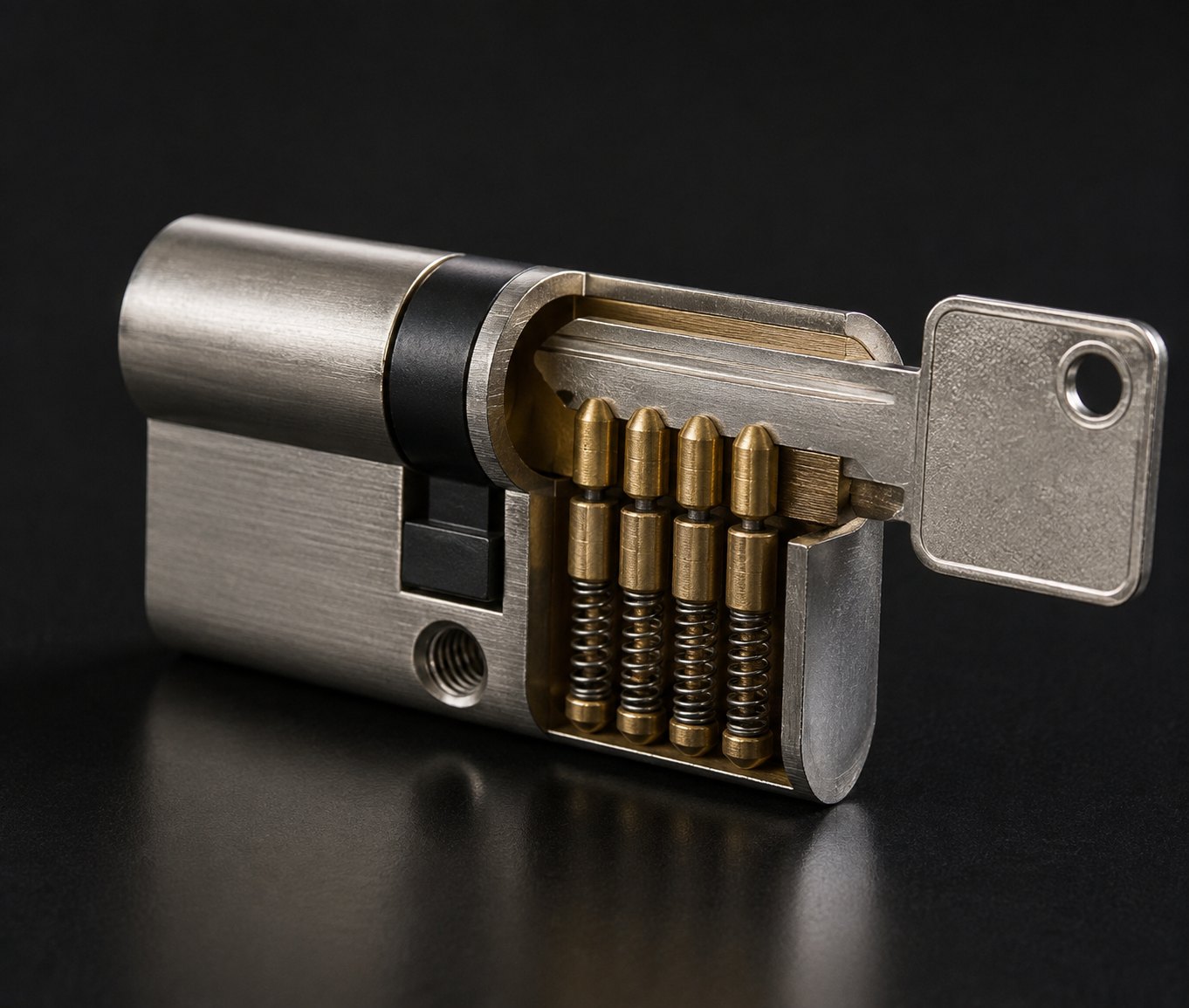
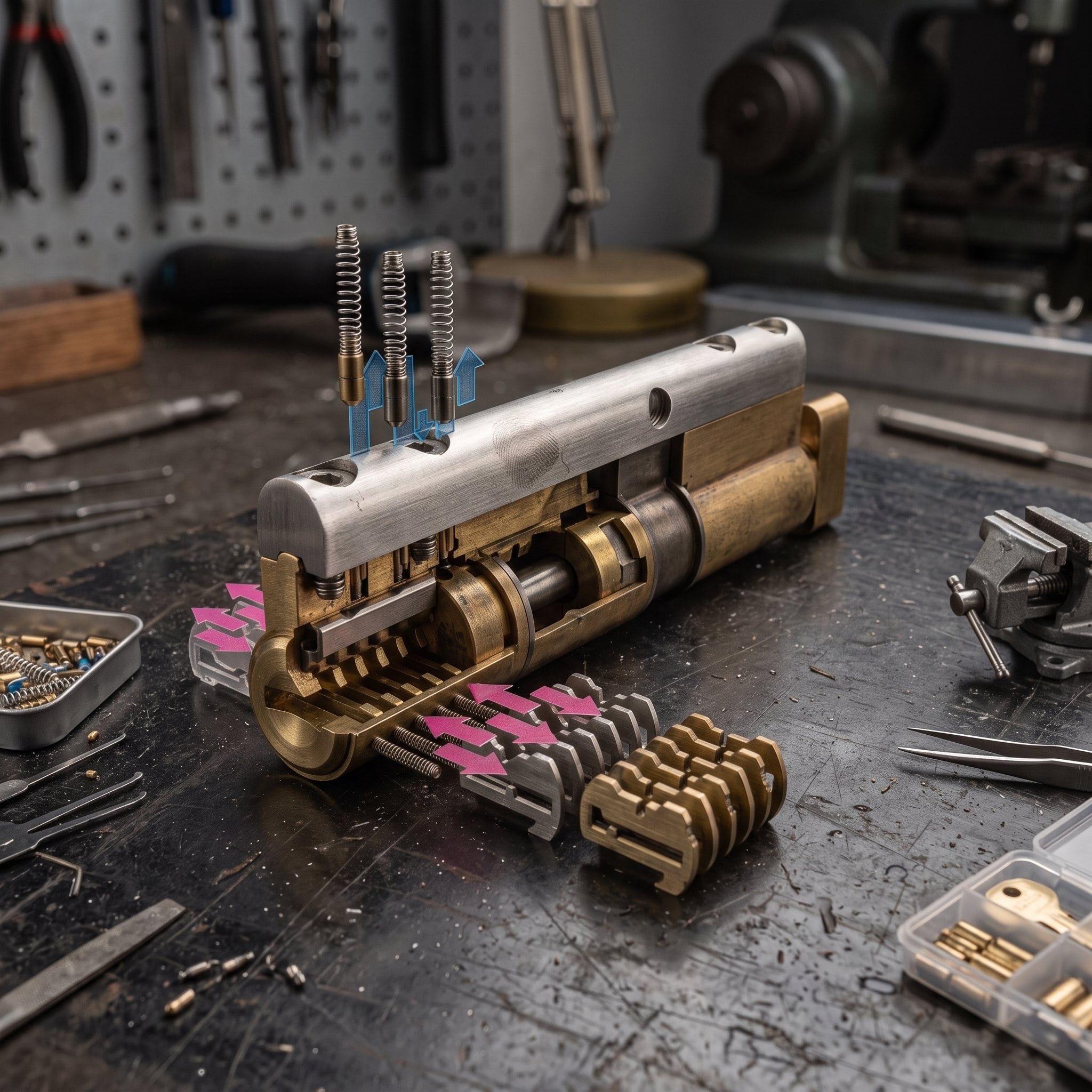
Manipulation resistance is a property of the cylinder — security pins, sidebars, restricted keyways — and it is not what the headline grade measures. A Grade 1 deadbolt can have an entirely ordinary five-pin cylinder in it.
Key control
If the blank can be bought anywhere and cut by anyone, then anybody who has held your key for a few minutes can have a working copy. Restricted keyways are the answer to that, and they are a separate purchase decision from the grade.
The doorway around it
This is the big one. Forced entry on a residential door usually does not defeat the lock at all — it splits the jamb or tears the strike plate out of the casing. The bolt survives, still fully extended, in a piece of wood that is now on the floor.
The specification that actually protects a door
- A Grade 1 or 2 deadbolt with a bolt throw of one inch.
- A reinforced strike plate, box-style rather than a flat plate, secured with screws long enough to reach the framing stud behind the jamb — three inches is the usual figure.
- Hinge screws upgraded to the same length on outward-facing doors. A door can be forced from the hinge side just as easily.
- No thumbturn within reach of glass. Beside a sidelight or a glazed panel, either a double-cylinder deadbolt or laminated glazing — with the caveat below.
A double-cylinder deadbolt needs a key from the inside, which is a genuine hazard in a fire and is restricted in some jurisdictions and building types. If you fit one, the interior key lives on a hook beside the door, always, and every adult in the house knows where.
Where the money is best spent
If the budget is fixed, spend it in this order: strike and hinge reinforcement first, because it is the cheapest change with the largest effect; then the deadbolt grade; then the cylinder's pick resistance; then key control. Buying a high-security cylinder for a door whose jamb splits under one shoulder is solving the fourth problem and leaving the first.
If you are choosing hardware because you have just moved in, read rekey or replace first — it decides how much hardware you are buying at all.
(01)Objections
Frequently asked
- Is a Grade 1 deadbolt worth it for a house?
- On the main entry, usually yes — the jump from Grade 3 to Grade 2 or 1 is a real difference in cycle life and impact resistance for a modest amount of money. But a Grade 1 bolt in a frame held by short screws still fails at the frame, so buy the grade and fix the anchoring together.
- Does a higher grade mean the lock is harder to pick?
- No. The grading measures mechanical endurance and physical attack resistance, not manipulation. Pick resistance comes from cylinder features — security pins, sidebars, restricted keyways — which are graded separately and often not mentioned on the box at all.
(02)Ask
Have a question about this?
Questions are read by a person and answered here on the page. We don't collect your email, so we can't reply privately.
(03)Written by
LAK Locksmith Team
Locksmiths and key technicians
LAK Locksmith has been working across the Greater Toronto Area since 2021, from 470 N Rivermede Rd in Vaughan. These guides are written by the technicians who do the work — residential, commercial and automotive — and are kept to what can be demonstrated on a doorstep rather than what sells.
All articles by LAK Locksmith Team