✳Keys & Fobs
Push-to-start keys are paired to the car rather than cut for it. What pairing means, why the vehicle has to be present, and what changed with security gateways.
✳On this page
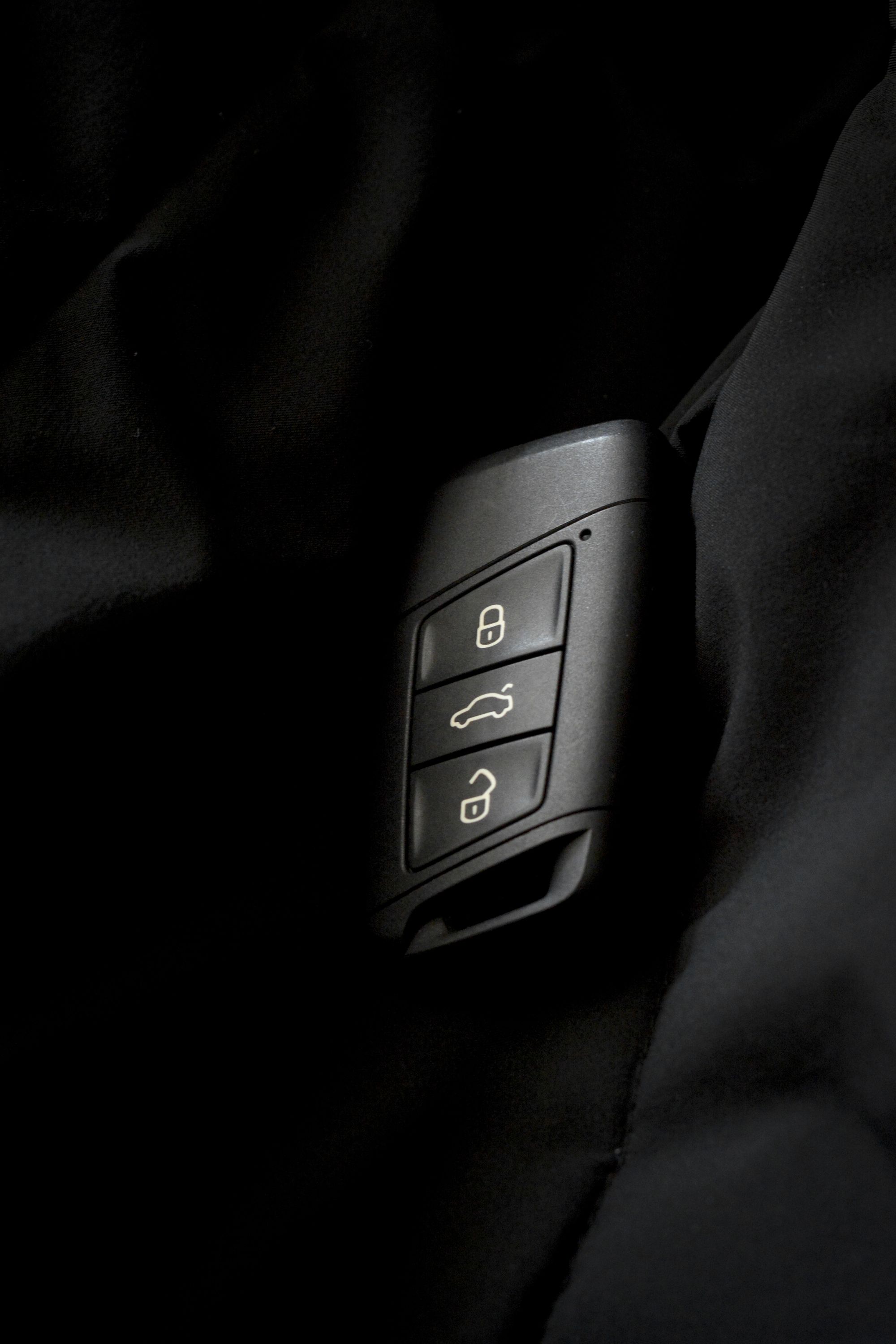
Programming a proximity key is a different operation from cutting one, and on most push-to-start vehicles there is nothing to cut at all — the shell hides an emergency blade for the door and nothing else. What makes the key work is a pairing written into the car.
What pairing actually does
The vehicle keeps a list of key identities it will accept. Programming adds one to that list, using a shared secret so the key can prove itself on every subsequent approach without ever transmitting the secret itself. The same challenge-and-response idea as an ordinary transponder key, running continuously in the background rather than once at ignition.
Because the list lives inside your car, the car must be there. This is the single most useful thing to know before buying a key online: an unpaired fob is a component.

How a session runs
- Ownership is verified. Document and matching identification, before anything is connected.
- The vehicle is identified precisely — make, model, year, trim, and often the immobiliser type, because two cars of the same model year can differ.
- Diagnostic equipment connects, usually at the OBD port, and the immobiliser is put into a state where it will accept a key.
- The security interval elapses. Many vehicles enforce a mandatory wait before accepting a new key — commonly ten to thirty minutes, occasionally longer. It cannot be shortened and it is not idle time on the technician's part.
- Keys are written and tested — approach detection, door handles, boot, start, and remote functions.
Bring every key you own
Worth repeating on its own. A number of manufacturers erase the whole key list when a new key is added, so any key left in a drawer at home is simply gone. If you have three fobs, bring three fobs.
The gateway question
Since the late 2010s several manufacturers have required authenticated access to their own systems before a key can be written. Where that applies, only a technician holding that access — or the dealer — can complete the job. This is decided by make, model and year, and it is the reason those are the first questions asked. A straight answer up front is worth more than an attempt; being told "we can't do that one, here is who can" is a good sign about who you are dealing with.
Two keys, one session
If you are having a key made at all, have the second one made in the same visit. The session is already open, ownership is already verified, and the security interval only has to be waited out once. Vehicles that arrive at an all-keys-lost job are, with dull regularity, vehicles that had exactly one key.
(01)Objections
Frequently asked
- Can a proximity key be programmed without the car?
- No. Pairing writes the key into the vehicle's own immobiliser, so the car has to be present and awake for the whole session. A key sold as 'pre-programmed' without your vehicle is not programmed to anything.
- Do I need to bring my existing keys?
- Bring every key you have. Some vehicles erase all previously paired keys when a new one is added, and any key not present during the session stops working. That is the vehicle's design and it is not reversible without repeating the process.
(02)Ask
Have a question about this?
Questions are read by a person and answered here on the page. We don't collect your email, so we can't reply privately.
(03)Written by
LAK Locksmith Team
Locksmiths and key technicians
LAK Locksmith has been working across the Greater Toronto Area since 2021, from 470 N Rivermede Rd in Vaughan. These guides are written by the technicians who do the work — residential, commercial and automotive — and are kept to what can be demonstrated on a doorstep rather than what sells.
All articles by LAK Locksmith Team