✳Cars & Vans· Essential guide
Car keys, from the insidePart 1 of 3
No spare, no key, and the car is in a parking lot. How a replacement is cut and paired on site, what the dealership does differently, and what the security gateway changed.
✳On this page
All keys lost is the trade's name for the situation where nothing exists to copy: no spare in a drawer, no key in a pocket, nothing to read the cuts from. It is the most involved automotive job there is, and it is also routine.
Why it is harder than cutting a spare
Copying a key is mechanical — the existing blade is read and duplicated. With no key at all, the cuts have to be derived rather than copied, and the vehicle then has to be persuaded to accept a device it has never seen. Modern vehicles refuse to start for a correctly cut blade alone; the immobiliser has to recognise the transponder inside it. If that part is unfamiliar, how transponder keys work covers it in one read.
How the job runs
1. Ownership is verified first
Before anything else. An ownership document, registration or insurance slip, and photo identification that matches it. This step is not negotiable and you should be suspicious of anyone who skips it — the whole point is that a stranger cannot have a key made to your car by describing it.
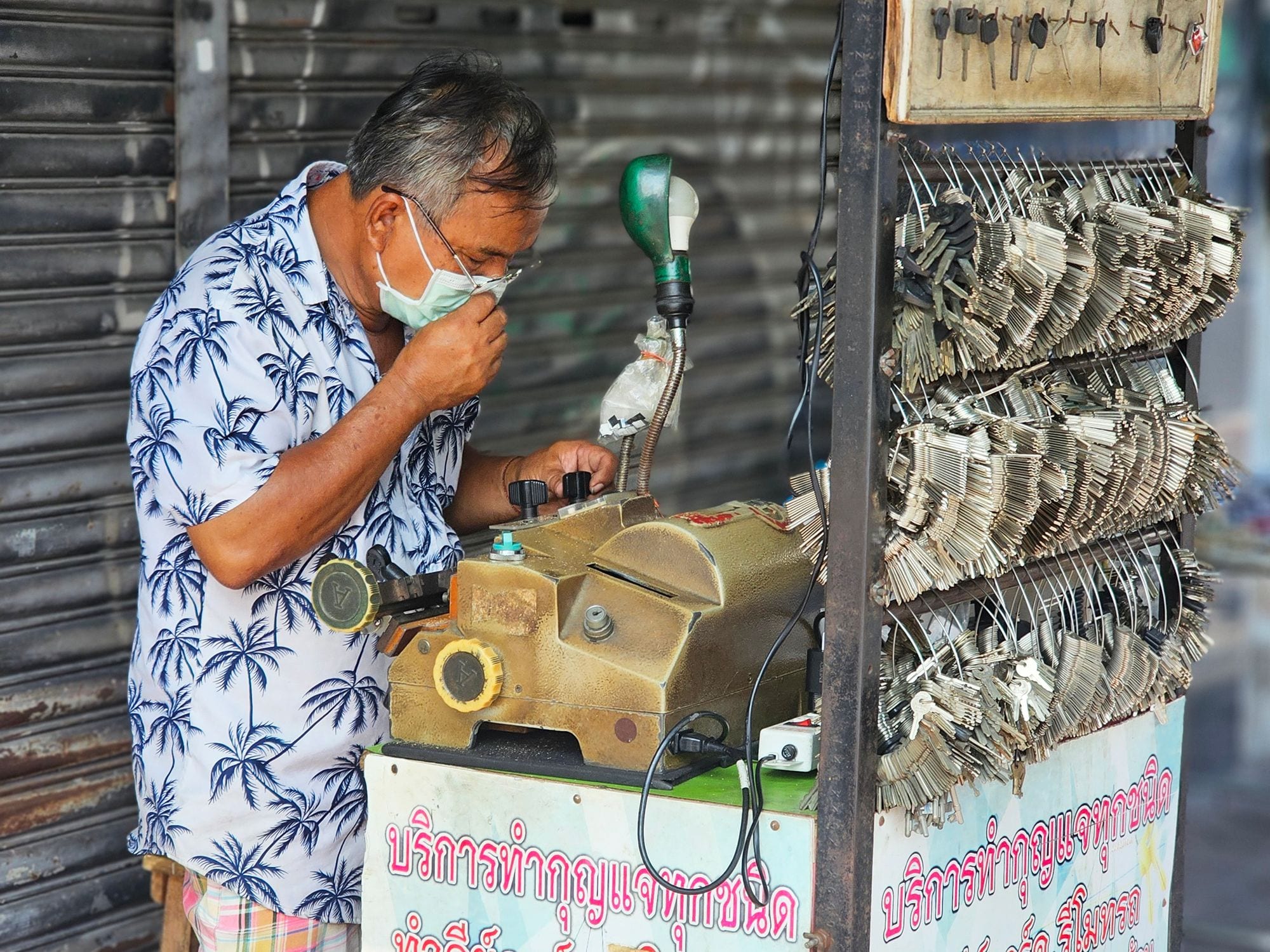
2. The cuts are derived
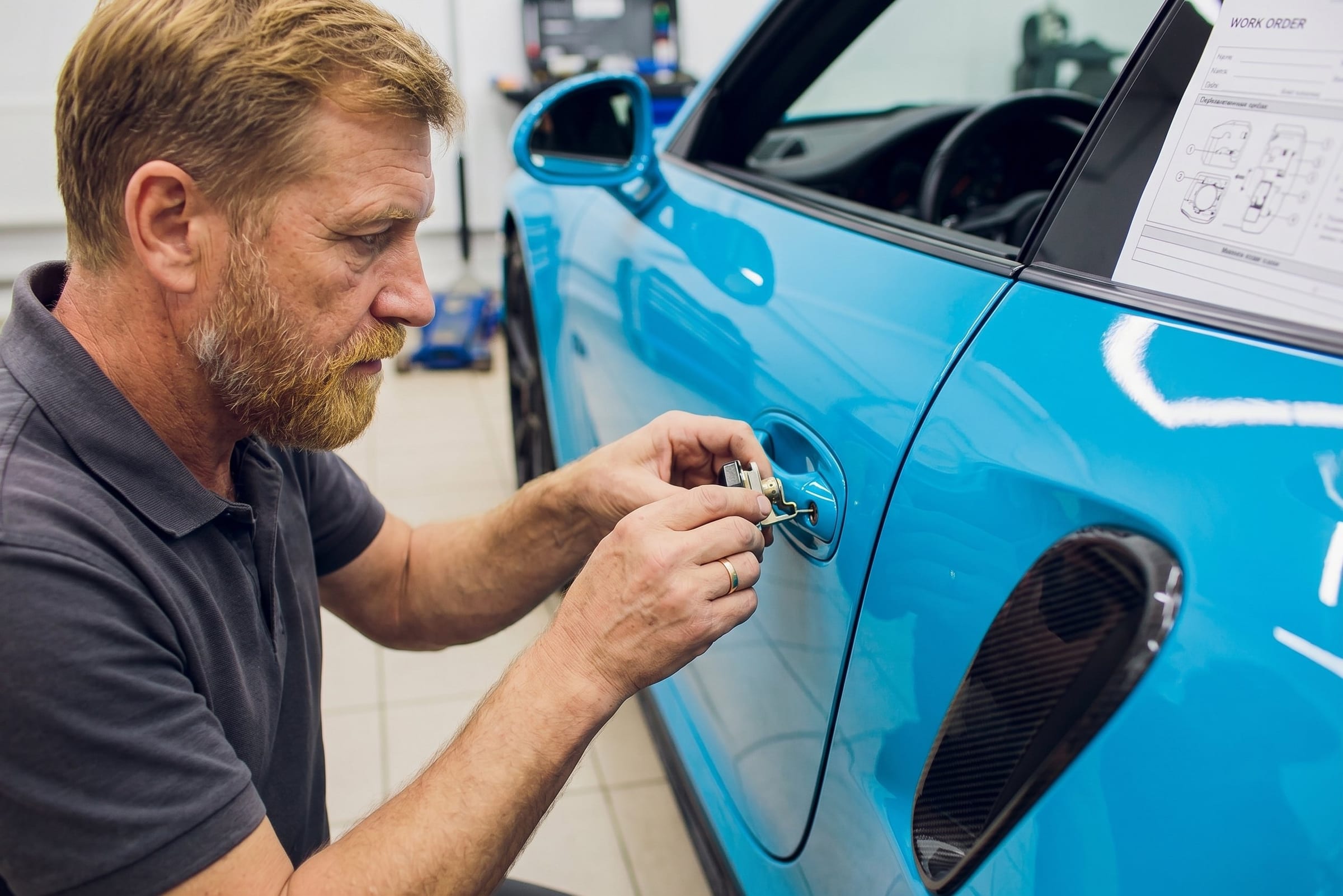
Either from the key code held against the vehicle identification number, or by reading the lock itself — decoding the door cylinder or the ignition to recover the bitting. Then the blade is cut, on site.
3. The transponder is paired
Diagnostic equipment connects to the vehicle and writes the new key into the immobiliser. Where the job takes time, it is almost always here: some vehicles enforce a security wait — often around ten to thirty minutes, sometimes longer — before they will accept a new key at all. That delay is the vehicle's design, not the technician's pace.
4. Everything is tested
Doors, boot, ignition or start button, and the remote functions. If a second key is being made at the same time, both are paired in the same session — which is meaningfully cheaper than coming back for it later.
What the security gateway changed
Since roughly the late 2010s a number of manufacturers have put key programming behind an authenticated gateway: the technician must hold credentials with the manufacturer's system to write a key at all. Where that applies, a mobile locksmith either holds that access or genuinely cannot do the job, and the correct answer is to say so rather than to try. Model, year and trim decide it, which is why those three things get asked on the phone.
Locksmith or dealer?
A dealer's advantages are that they always hold the manufacturer's access, and that they can supply keys for vehicles nobody else can. Their practical disadvantages for an all-keys-lost situation are that the car has to reach them — which means a tow from wherever it is stranded — and that they work business hours.
A mobile locksmith comes to the vehicle, works outside business hours, and covers most makes and years. What matters is being told honestly which side of the line your vehicle falls on before anyone is dispatched.
The one thing worth doing afterwards
Have a second key made in the same visit. Nearly every all-keys-lost call is a car that had exactly one key, and the second key is by a wide margin the cheapest one you will ever buy — the programming session is already open, ownership is already verified, and the technician is already there.
Then read how to tell a flat battery from a dead fob, because the next thing that goes wrong is usually that, and it is often not a job at all.
(01)Objections
Frequently asked
- What do I need to have ready?
- Proof you own the vehicle and photo identification matching it — an ownership document, insurance slip or registration. No legitimate locksmith cuts a key to a car on someone's say-so, and being asked is a good sign rather than an obstacle.
- Does the car have to be towed anywhere?
- Usually not. Cutting and pairing are done at the vehicle for most makes and years, which is the main practical advantage over a dealer. The exceptions are vehicles whose programming is gated behind manufacturer systems that a mobile setup cannot reach.
- Can a key be made if the car is locked and the key is inside?
- That is a different and usually simpler job — the door is opened non-destructively and you have your key back. Say so on the phone, because it changes what gets brought.
(02)Ask
Have a question about this?
Questions are read by a person and answered here on the page. We don't collect your email, so we can't reply privately.
(03)Series
Car keys, from the inside
- 01All keys lost: what a locksmith can do at the vehicleReading
- 02How transponder keys work — and why a cut key won't start the car
- 03Is the fob dead, or is it just the battery?
(04)Written by
LAK Locksmith Team
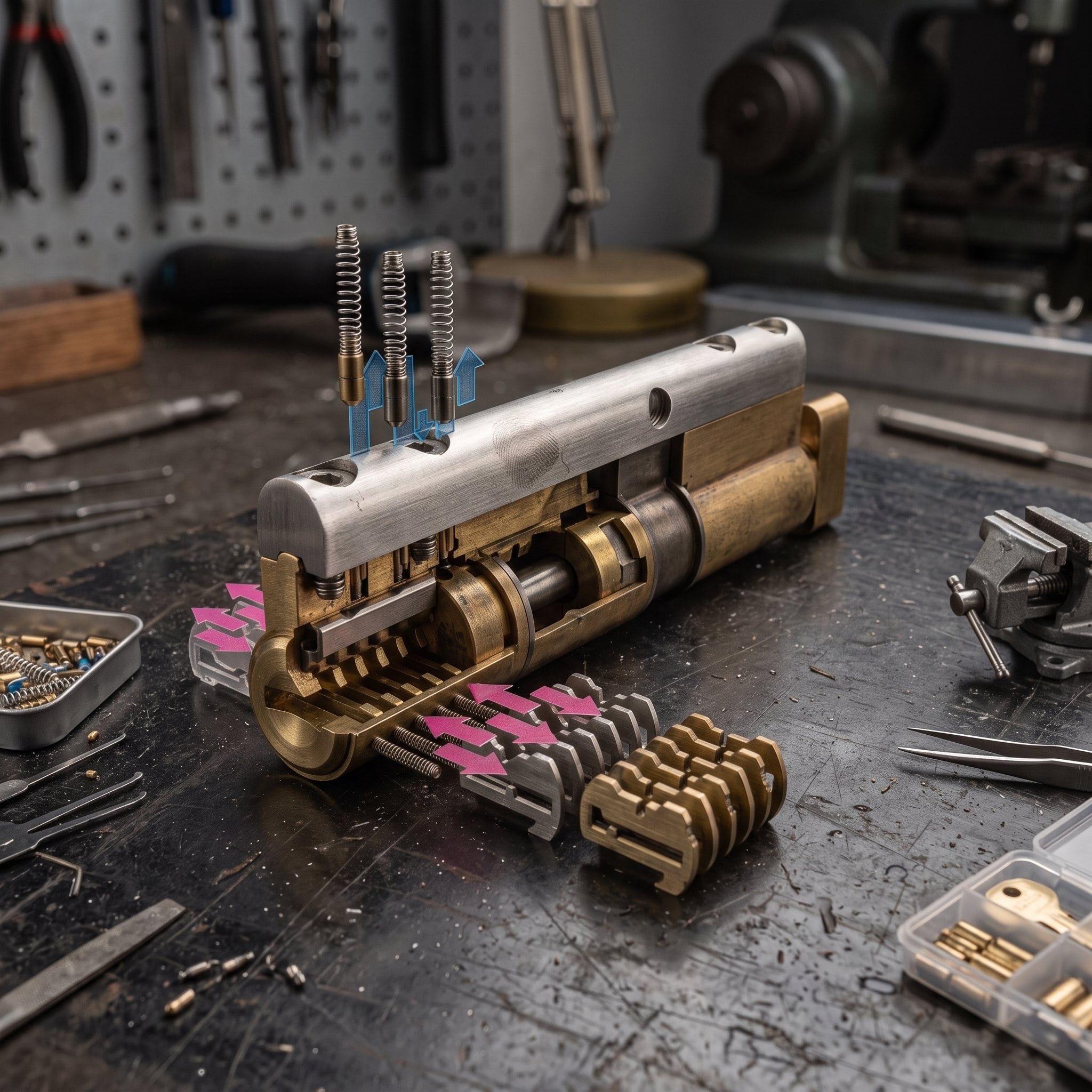
Locksmiths and key technicians
LAK Locksmith has been working across the Greater Toronto Area since 2021, from 470 N Rivermede Rd in Vaughan. These guides are written by the technicians who do the work — residential, commercial and automotive — and are kept to what can be demonstrated on a doorstep rather than what sells.
All articles by LAK Locksmith Team