✳Business & Property
Exit devices are life-safety hardware, and the common failures are boringly consistent. What gets flagged, what dogging is for, and why a chain on a fire door is never acceptable.
✳On this page
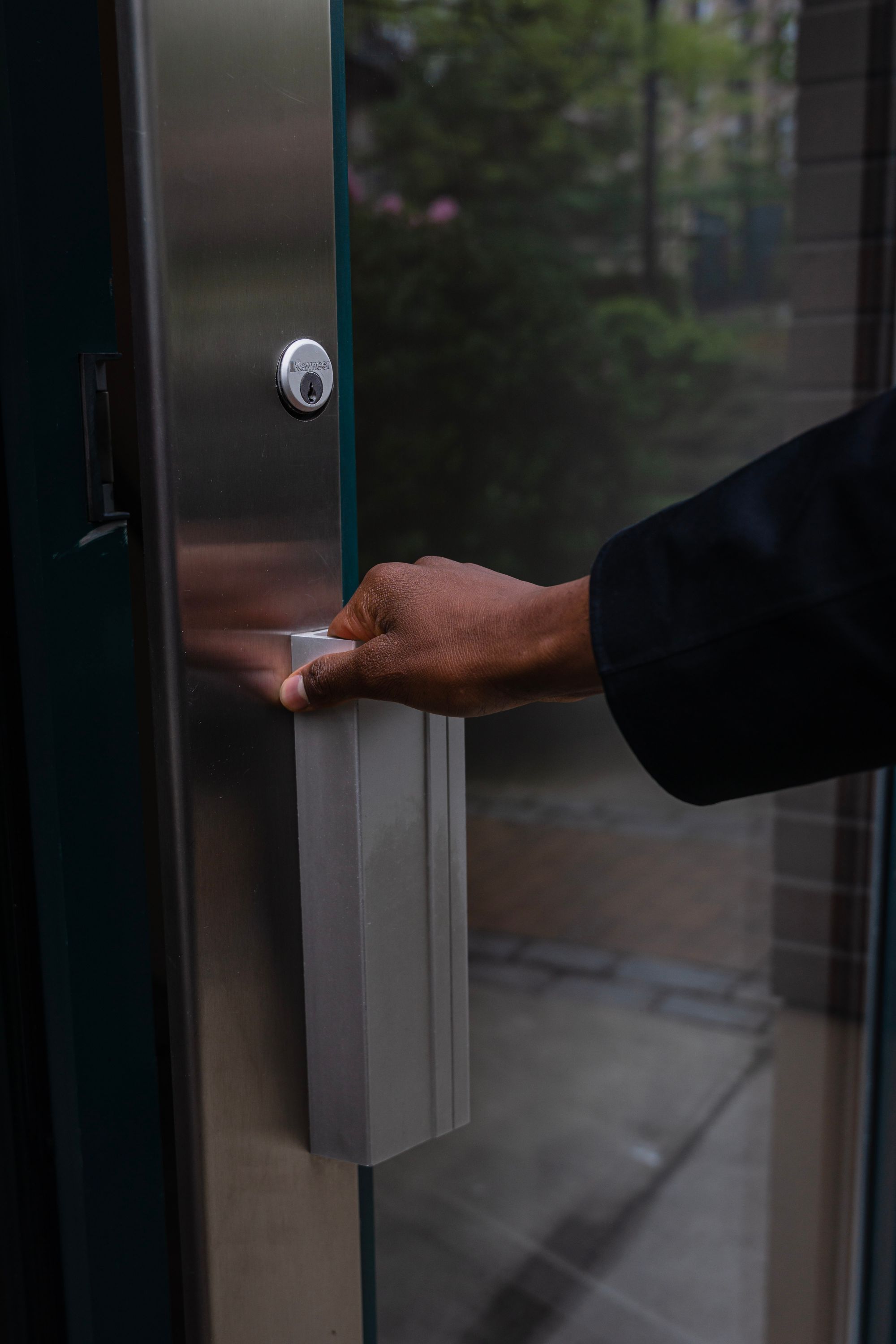
A panic bar — properly an exit device — exists for one situation: a crowd moving towards a door in poor visibility, pushing rather than operating anything. Everything about how it is judged follows from that.
The principle underneath every rule
Egress must be possible in a single motion, from the inside, without a key, a code, a tool or special knowledge, whenever the building is occupied. Test any arrangement against that sentence and most questions answer themselves. A thumbturn above the bar that has to be turned first is a second motion. A sign explaining how to open the door is special knowledge. A padlock is neither.

What gets flagged on panic bars and exit doors
- Something added to the inside. A slide bolt, a hasp, a chain, a padlock — fitted for genuine security reasons after hours and then left in place during trading. This is the most common and the most serious finding.
- An obstructed exit path. Stock, bins, pallets or a parked vehicle in front of a door that has to open. The hardware can be perfect and the door still fails.
- A fire-rated door dogged open. A rated door has to latch to hold back fire and smoke. Holding the latch retracted defeats the door's entire purpose, and rated devices should not offer mechanical dogging at all.
- A door that no longer latches. Usually a closer that has drifted out of adjustment or a strike that has moved. Push it and let go from six inches — if it does not latch on its own, it is not doing its job.
- Damaged or missing hardware — a bar with a broken end cap, a missing closer arm, hinges pulling out of the frame.
- Unsupported field modifications. A hole drilled through a rated door for a new cylinder or a cable can void the rating outright.
Dogging, correctly
Dogging holds the bar depressed so the door is push-open with the latch retracted — useful for a shop that wants free flow during opening hours. It is legitimate on a non-rated door and never on a fire-rated one. The distinction is worth training staff on explicitly, because from the inside the two doors look identical and the hex key does not know the difference.
Delayed egress and alarmed devices
Delayed-egress hardware — where pushing the bar starts a countdown before the door releases — exists for real reasons, principally retail loss and patient wandering, and it is permitted only in specific occupancies with specific signage, alarm and fire-alarm release arrangements. It is not a general-purpose way of discouraging use of a fire exit, and fitting it on that basis is how a business ends up with an order and a deadline.
A monthly walk that takes ten minutes
- Walk to each exit the way an occupant would. Anything in the path?
- Push the bar with one hand and no preparation. Does the door open?
- Let it close from six inches. Does it latch by itself?
- Look at the inside face. Has anything been added since last month?
- Check the signage is present and legible.
Write down the date and what you found. A dated record of monthly checks is itself worth something when an inspector arrives — and the specific requirements for your building come from the Ontario Fire Code and your local fire prevention office, which is who to ask when something is genuinely unclear.
Where this touches the rest of the building
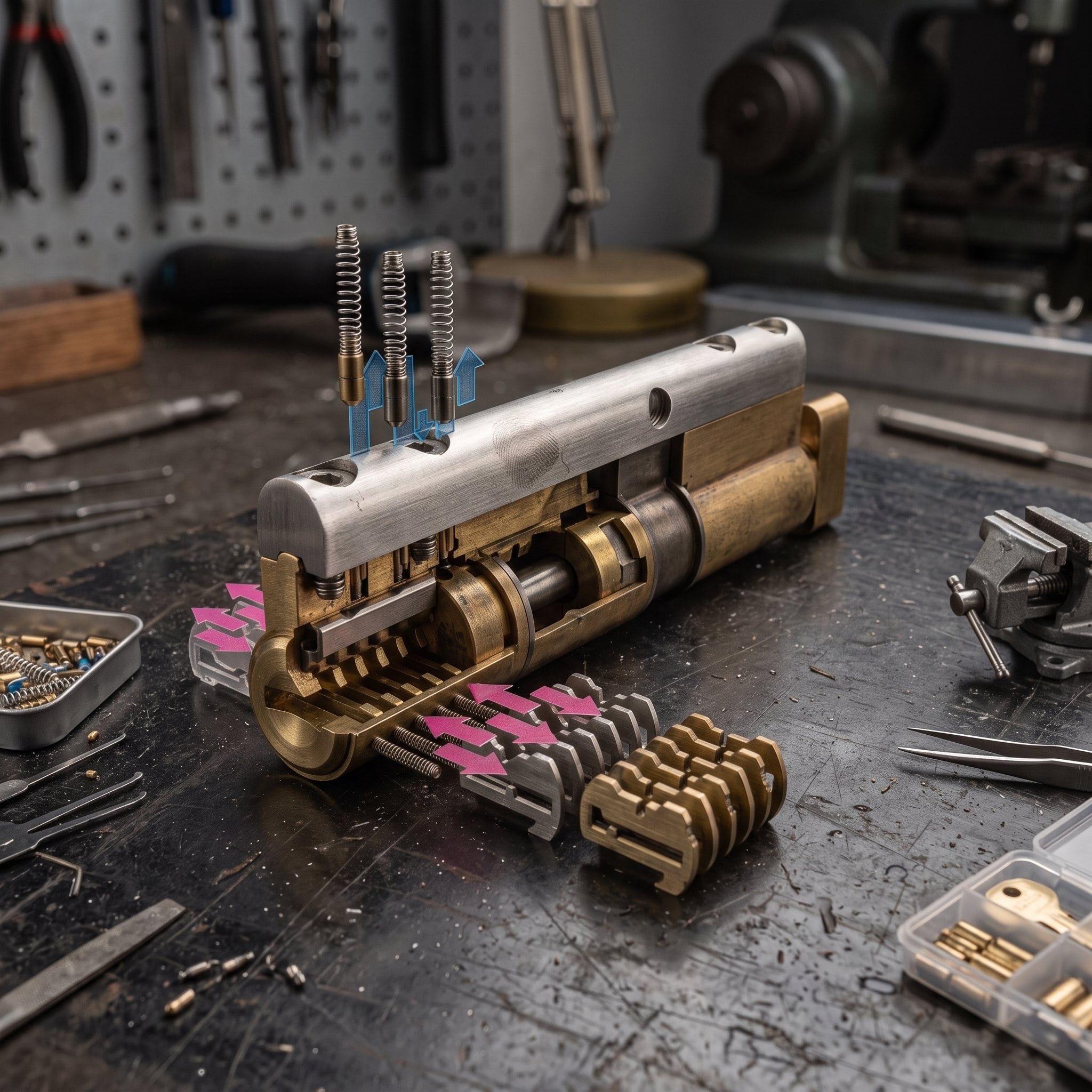
Two things commonly collide with exit hardware. The first is keying: an exit door usually carries an outside trim cylinder that belongs in the building's hierarchy, and that has to be planned rather than bolted on — see planning a master key system. The second is electrification. Magnetic locks, electric strikes and card readers on an exit door are all permitted arrangements in the right configuration and all easy to get wrong, which is the subject of access control for a small business.
Neither one creates an exception to the single-motion rule. If a proposed arrangement requires an occupant to know something, do something twice, or find a key, it is the wrong arrangement no matter what it is protecting.
(01)Objections
Frequently asked
- Can I lock an exit door during business hours?
- From the outside, generally yes. From the inside, no — an occupied building must allow anyone to leave in a single motion without a key, a code or special knowledge. That is the principle behind every rule in this area.
- What does 'dogging' a panic bar mean?
- Holding the bar depressed so the door stays push-open and the latch is retracted, usually with a hex key or a cylinder. It is legitimate on non-rated doors during opening hours, and never permitted on a fire-rated door, which must latch to do its job.
(02)Ask
Have a question about this?
Questions are read by a person and answered here on the page. We don't collect your email, so we can't reply privately.
(03)Written by
LAK Locksmith Team
Locksmiths and key technicians
LAK Locksmith has been working across the Greater Toronto Area since 2021, from 470 N Rivermede Rd in Vaughan. These guides are written by the technicians who do the work — residential, commercial and automotive — and are kept to what can be demonstrated on a doorstep rather than what sells.
All articles by LAK Locksmith Team